
Quick answer
Which inherited vintage signs should I get appraised before an estate sale?
Before an estate sale, set aside pre-1970 gas and oil signs, porcelain signs with maker’s marks, and old neon with its original frame or hardware. Photograph the collection in place, then number the signs so each can be evaluated separately.
If you’re clearing out a garage, barn, or workshop in the Sacramento area, set aside the old advertising signs before you price the rest of the estate. A dusty sign from a service station or repair shop can be easy to overlook, especially when it’s still screwed to the wall. A few photos and measurements can help identify which pieces deserve a closer look.
What to pull aside first
Start with pre-1970 advertising. Look for porcelain gas and oil signs, small pump plates, double-sided signs, and old neon that once hung in a storefront or tavern. Check for mounting brackets, separate panels, or the original frame nearby. If you also find a vintage gas pump or rare oil cans, photograph those separately so they can be evaluated on their own.
Photograph first, price second
Take a straight-on photo of the front and back, a close-up of any small print or maker’s mark, and a shot of the mounting holes and damaged areas. Measure the height and width. If a sign is still mounted, photograph what you can reach safely and note how it’s attached. Keep old photos, receipts, or notes that show where it came from. That history can help identify a piece whose markings are hard to read.
When you have a whole collection
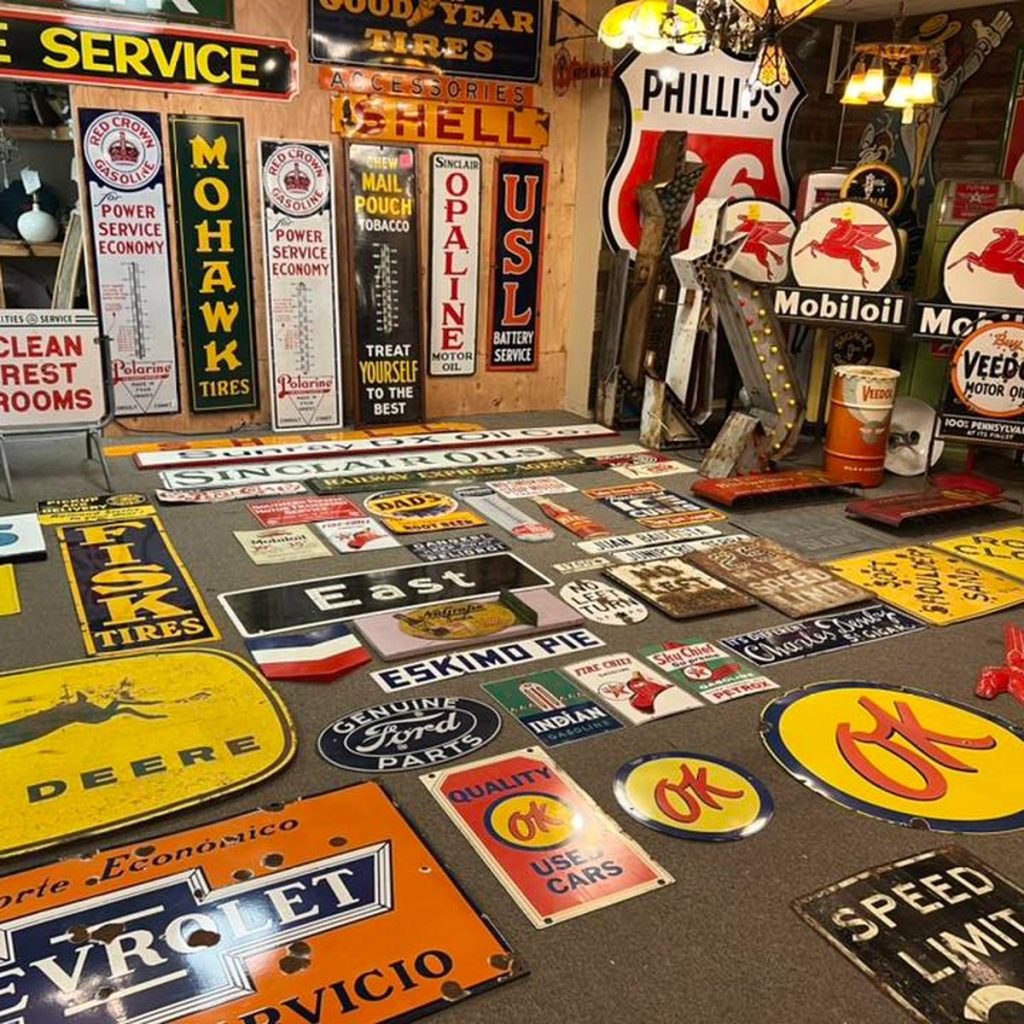
Start with wide photos of the room and close-ups of a few pieces that look promising. Give each sign a number so you can match photos to measurements. Keep brackets, frames, and hardware with the pieces they belong to. Hold off on repainting or scrubbing off surface wear before someone evaluates it. Once you have an idea of what you own, you can decide which pieces to offer separately and which to include in the estate sale.
Build a photo inventory before the sale
For an inherited garage or shop collection, make a short record while everything is still in front of you. Start with a room-wide photo with numbered signs, followed by individually labeled front and back views. Include the sign’s original location, any family photos of it in service, and the sale deadline. One way to keep everything straight is to capture handwritten lot numbers on removable paper beside the pieces. Preserve each image at its original size. Wide shots establish context, and close-ups let someone zoom in on the details that are too small to read in the wide shot.
If you have more than one piece, give each one a simple number and use it in the photo filenames or in your message. Keep any paperwork with the matching item. Be especially clear about signs hung at different heights or stored behind fixtures. Write down who told you the history and when, and mark dates or attributions you’re unsure about. That gives a buyer something specific to follow up on when a photo raises a question.
When several pieces are involved, a single message can introduce the collection and list the items you’re ready to sell. Follow it with the clearest photos of the most promising piece. You can send additional details as requested. If timing matters, mention when you need a decision and whether the items have to be moved by that date. An early conversation is easier if the owner can still check a measurement or photograph a label.
Decide which pieces need separate research
Start with the exact kind of item you have. In this category, you might encounter a porcelain service station sign, a repair-shop panel, and a lighted beer display. Those are separate starting points for research. For each plausible match, write down its measurements, material, condition, sale date, and any detail that explains a difference from your example. Keep the link and a note about where the price came from, so you can revisit the comparison later.
Ask whether the number represents a completed sale, an active listing, or an estimate. In an auction result, check whether the figure is the winning bid alone or includes the buyer’s premium. If you’re deciding whether to sell, consider what you would receive after fees, packing, and transport. Keep prices in their original units and use the actual sale date when comparing older results with recent ones.
When the closest match has an important difference, write it in plain language. It might be a smaller example, a different mounting style, or an unusually complete piece. Avoid applying a fixed discount without evidence. Two or three imperfect matches can still help a buyer explain a range if the differences are visible. If the sale history is thin, the photos and ownership history become especially useful.
Decide which items to hold back
If you need to make fast decisions, put the signs into three groups. Set aside pieces that have a readable maker’s mark, convincing shop history, or obvious original hardware. Photograph uncertain pieces and keep them available for follow-up. Leave items you can confidently date to a later period in the general sale if that suits your plans. A sign can still be valuable to the family even if you end up keeping it. Write down who can approve a sale and whether they need to see photos or an offer first.
An example from a seller’s point of view
Here’s a hypothetical example. A family preparing for a weekend estate sale finds two signs in the garage and a third still attached above the workshop door. At first, the seller has enough information to start looking online but still has several details to confirm. Rather than relying on the first result, they photograph the whole garage, number the pieces, and send close-ups of the shop sign with a photo of it hanging over the business counter decades earlier. The payoff is practical. The inherited signs may need separate research and can be held back while ordinary estate items are priced.
The family discovers that the face of a cabinet blocks access to a plaque. They photograph what’s visible and note where the plaque sits instead of taking the cabinet apart. A photo of the original shop provides context that a bare measurement cannot. As they sort the room, they keep loose brackets beside the items they appear to fit and mark uncertain matches as uncertain.
What to photograph for an appraisal
- Take an overview of the estate collection and give each sign a number.
- Take straight-on photos of the front and back where you can reach them safely.
- Add close-ups of the edges, mounting holes, marks, and any damage or repairs.
- Send dimensions, your location, and any history you can document.
Frequently asked questions
Can I send pictures before I know what the signs are?
Yes. Start with an overview and a few close-ups. Give each sign a number so we can ask about the right item.
Should I list every sign at one price?
Separate distinct pieces until you know what they are. A single lot price can hide differences in age, condition, and buyer demand.
What if my sale is this weekend?
Include the date in the first message and identify the pieces you can hold back if more information is needed.
What should I include when I ask for an appraisal?
Start with a room-wide photo with numbered signs, followed by individually labeled front and back views. In your message, include the sign’s original location, any family photos of it in service, and the sale deadline. State where the piece is and whether you’re looking for a valuation, interested in selling, or both. For multiple pieces, start with an overview so we can tell which photos go together.
Can I get a useful estimate from one photo?
A front photo is enough to start the conversation. A buyer may need the back, dimensions, markings, and condition details before giving a meaningful estimate. If you can get only one view safely, send it and explain where the sign is mounted or stored.
Should I remove a sign before requesting an appraisal?
Start with photos in place if the sign is hard to reach. Include the height, mounting style, and access so removal can be discussed separately.
What if two signs have the same logo?
Give each its own number and photograph both sides. Size, construction, or condition may differ even when the fronts look alike.
What if I only have a photograph of the old storefront?
Include it alongside current photos and point out the sign you believe matches. The storefront photo can help support the sign’s history.
Get a Sacramento vintage sign appraisal
Antique Sign Guy appraises and buys pre-1970 signs. Text a few photos to 916-817-9625 and mention your location, the dimensions, and your estate sale date if you have one. If you’re sorting several pieces, send the overview first. See how to get your vintage sign appraised for more details.
Related vintage sign guides
See how we assess vintage neon beer signs and how to date a porcelain gas station sign.
