
Quick answer
Is my old neon sign worth anything if it doesn’t light up?
Yes, a nonworking neon sign can still have collector value, especially if the design is sought after and the frame, lettering, and tubing are largely intact. Leave damaged or untested signs unplugged and ask for an as-is estimate before paying for repairs.
A nonworking vintage neon sign can still be collectible. Learn how to document its condition and what affects the offer.
Start with what’s still there
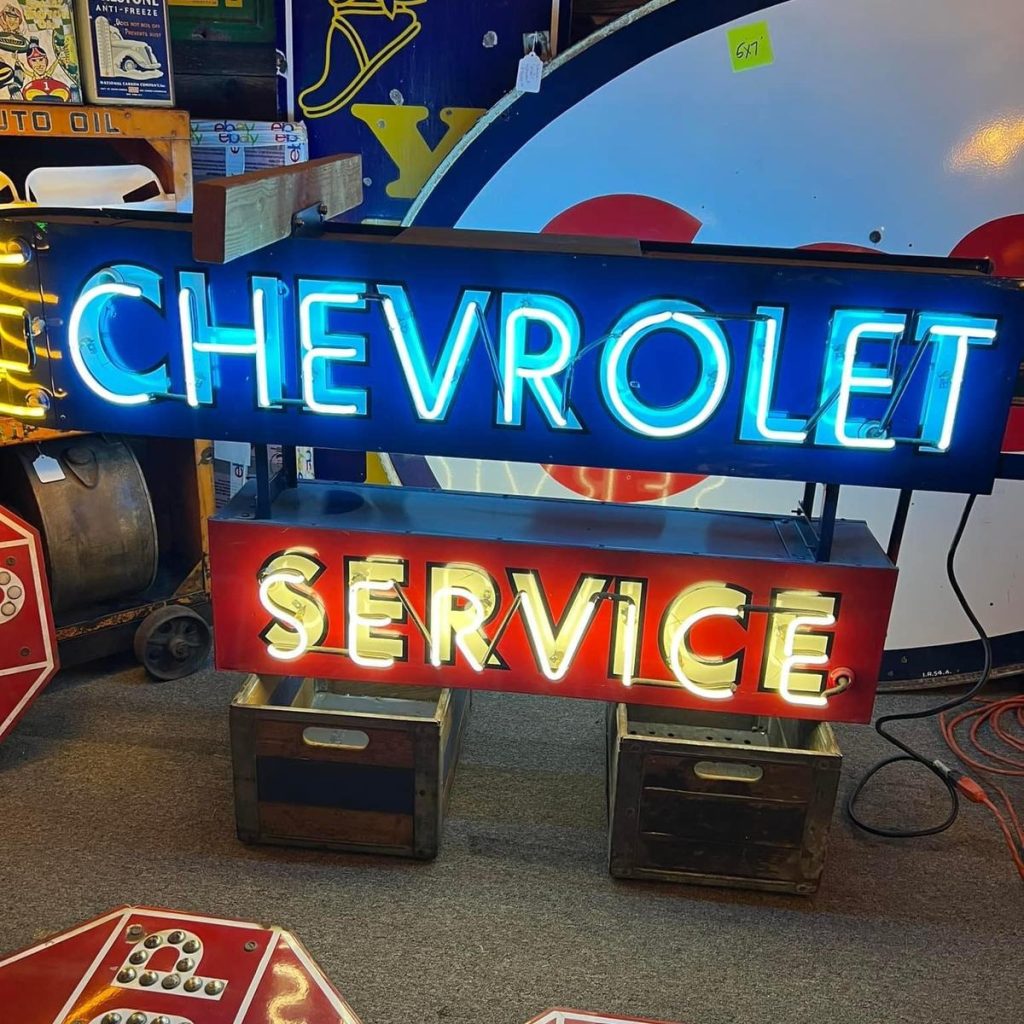
A nonworking sign can still have collector value when the design is desirable and the original frame, lettering, and tubing are largely intact. Check for missing letters, cracked tubes, broken mounts, and a missing backing panel. Photograph the sign as found.
Describe the problem without testing it
Say whether it last worked, has a known broken section, or has simply sat unplugged for years. Leave damaged or untested signs unplugged. A neon specialist can inspect the sign and help you understand what work might be needed.
Compare repair cost with the likely selling price
Ask for an as-is estimate before spending money on repairs. If you also get a repair quote, compare it against completed sales of matching signs in working and nonworking condition. Buyers may care about who did the repair and which parts were replaced.
Make a photo record a buyer can use
For an old neon sign with unknown operating condition, make a short record while everything is still in front of you. Start with the lettering, frame, present glass sections, and photos of exterior labels. Include what worked when last used and whether repair or replacement is documented. One way to keep everything straight is to capture a written description of the last known condition. Preserve each image at its original size. Wide shots establish context, and close-ups let someone zoom in on the details that are too small to read in the wide shot.
If you have more than one piece, give each one a simple number and use it in the photo filenames or in your message. Keep any paperwork with the matching item. Be especially clear about unknown wiring, missing original parts, and repair quotes based on incomplete descriptions. Write down who told you the history and when, and mark dates or attributions you’re unsure about. That gives a buyer something specific to follow up on when a photo raises a question.
When several pieces are involved, a single message can introduce the collection and list the items you’re ready to sell. Follow it with the clearest photos of the most promising piece. You can send additional details as requested. If timing matters, mention when you need a decision and whether the items have to be moved by that date. An early conversation is easier if the owner can still check a measurement or photograph a label.
Compare completed sales before choosing a price
Start with the exact kind of item you have. In this category, you might encounter a sign with one section out, a frame with missing glass, and an untested sign in storage. Those are separate starting points for research. For each plausible match, write down its measurements, material, condition, sale date, and any detail that explains a difference from your example. Keep the link and a note about where the price came from, so you can revisit the comparison later.
Ask whether the number represents a completed sale, an active listing, or an estimate. In an auction result, check whether the figure is the winning bid alone or includes the buyer’s premium. If you’re deciding whether to sell, consider what you would receive after fees, packing, and transport. Keep prices in their original units and use the actual sale date when comparing older results with recent ones.
When the closest match has an important difference, write it in plain language. It might be a smaller example, a different mounting style, or an unusually complete piece. Avoid applying a fixed discount without evidence. Two or three imperfect matches can still help a buyer explain a range if the differences are visible. If the sale history is thin, the photos and ownership history become especially useful.
Ask for two estimates before choosing a repair
An as-is offer and a repair quote answer different questions. Ask what the buyer would pay for the sign in its present state. If a neon specialist evaluates it, ask which pieces would have to be replaced and whether there are signs of earlier work. Compare the quote with an estimate for the same sign in working condition. Also account for time and transport. This helps you decide whether the repair makes financial sense or whether to offer the sign to a collector who wants to handle it.
An example from a seller’s point of view
Here’s a hypothetical example. A seller finds a neon sign with one broken letter and a second sign that has sat unplugged for years. At first, the seller has enough information to start looking online but still has several details to confirm. Rather than relying on the first result, they keep both unplugged, document the broken area, and ask separately for an as-is valuation and a professional repair estimate. The payoff is practical. They can evaluate whether repair is worthwhile and avoid treating an untested sign as confirmed broken.
The seller distinguishes a known break in a letter from an unknown electrical condition in the second sign. Buyers can evaluate those cases differently. Repair records matter too. If the first sign had restoration years ago, a dated invoice can show which section was worked on and whether the shape or color was changed.
What to photograph for an appraisal
- Photograph the lettering and any visibly broken or missing tubing with the sign unplugged.
- Take straight-on photos of the front and back where you can reach them safely.
- Add close-ups of the edges, mounting holes, marks, and any damage or repairs.
- Send dimensions, your location, and any history you can document.
Frequently asked questions
Should I plug it in before sending photos?
Leave it unplugged if condition is unknown or there is damage. Photos and the last known operating history can start the appraisal.
Can I get an estimate before paying for repair?
Yes. Ask for an as-is estimate first and compare it with likely sale proceeds after reputable repair.
Does replaced glass always hurt value?
Its impact depends on the piece, condition, workmanship, and buyer preferences. Report what was replaced and keep repair documentation.
What should I include when I ask for an appraisal?
Start with the lettering, frame, present glass sections, and photos of exterior labels. In your message, include what worked when last used and whether repair or replacement is documented. State where the piece is and whether you’re looking for a valuation, interested in selling, or both. For multiple pieces, start with an overview so we can tell which photos go together.
Can I get a useful estimate from one photo?
A front photo is enough to start the conversation. A buyer may need the back, dimensions, markings, and condition details before giving a meaningful estimate. If you can get only one view safely, send it and explain where the sign is mounted or stored.
Is a dark section the same as broken glass?
Describe exactly what you observed. A section can appear dark for different reasons, and a photo can help someone distinguish visible damage from an unknown fault.
Should I remove loose pieces before sending photos?
Photograph how the sign was found and keep loose parts with it. Use a qualified professional if damaged glass or wiring needs handling.
Will a repair quote tell me the sign’s value?
A quote estimates the cost of work. Compare it with an as-is offer and documented sales before choosing how to sell.
Get a vintage sign appraisal
If you think your sign was made before 1970, text photos of both sides, close-ups of markings, and dimensions to 916-817-9625. See how to get your sign appraised.
